

You Lead The Mission. We Build The Infrastructure.
Integrated Executive Financial Infrastructure™ determines how effectively organizations scale, report, and lead through complexity.
Structured executive assessment • Approximately 3–5 minutes • Designed for organizations navigating complexity, reporting strain, or operational transition.
Integrated Executive Financial Infrastructure™
Kontab builds Integrated Executive Financial Infrastructure™ for growing, mission-driven organizations.
By unifying visibility, coordinating reporting systems, and aligning financial oversight into a single coordinated infrastructure, we eliminate the fragmentation that emerges when organizational complexity outpaces legacy infrastructure—establishing reporting continuity, operational clarity, and leadership confidence at scale.
Infrastructure Stability Outcomes
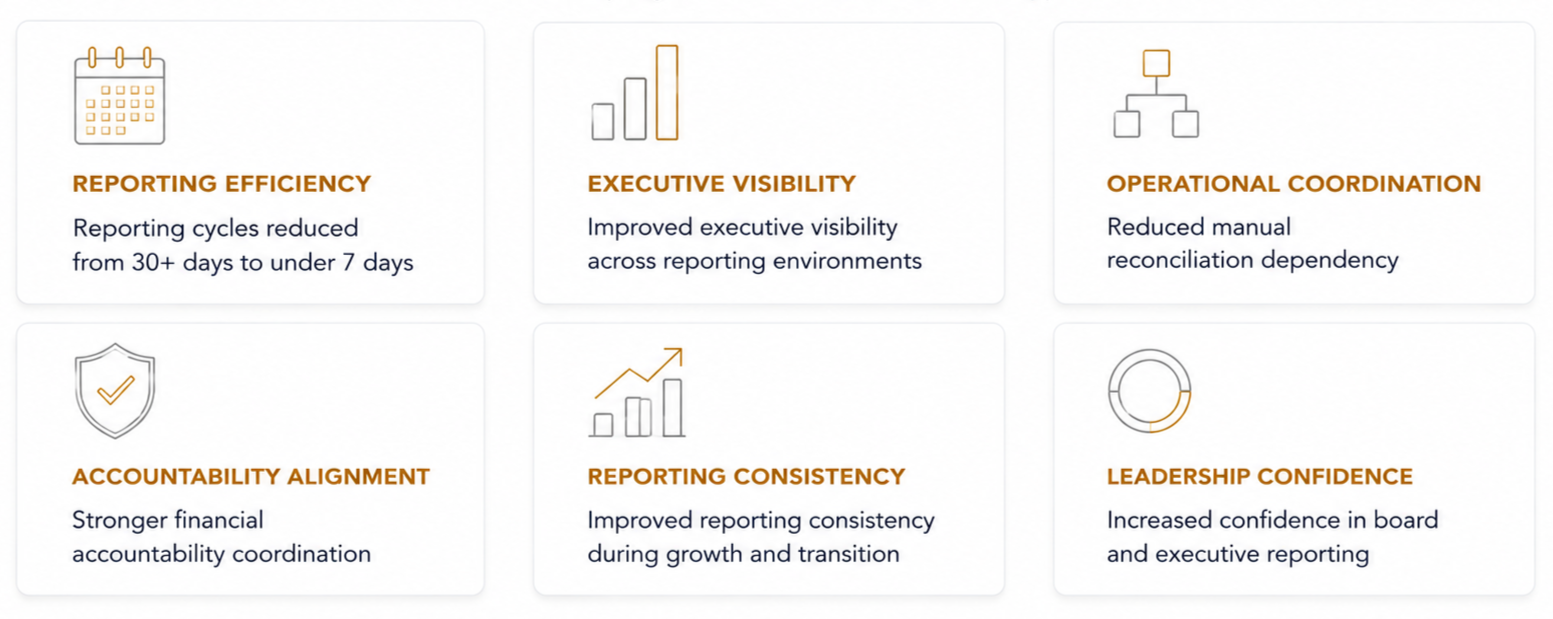
Stronger reporting visibility, infrastructure coordination, and executive oversight begin with identifying where operational fragmentation exists.
Integrity by Design, Excellence by Standard
Kontab was founded on the belief that disciplined execution, clear communication, and dependable systems create stronger organizations.
Led by Syndia Alexandre, Kontab brings 15+ years of experience across nonprofit finance, public funding environments, reporting transformation, and financial operations leadership.

Financial Infrastructure™ Intelligence Hub
Institutional continuity, operational coordination, governance visibility, and infrastructure intelligence perspectives for complex organizational environments.
-
Kontab addresses the structural friction that erodes reporting, continuity, and visibility during expansion. When complexity outpaces infrastructure, fragmentation spreads—driving reporting instability, compounding operational friction, and weakening accountability. Resilient organizations reinforce continuity through Kontab Integrated Financial Infrastructure™ designed to sustain clarity, leadership confidence, and long-term scalability.
“The cost of inefficiencies often compounds before measured.” - Kontab -
Organizational environments where operational expansion begins exceeding infrastructure coordination capacity, reporting continuity discipline, and governance synchronization readiness.
The Quiet Drain: When Growth Begins Outpacing Infrastructure Coordination
The Scale Bottleneck: How Organizational Complexity Quietly Weakens Operational Continuity
Expansion Without Coordination: Why Growth Alone Does Not Create Institutional Stability
The Growth Divide: Why Organizations Either Stabilize Structurally or Fragment Operationally
Scaling Beyond Visibility: The Hidden Cost of Delayed Infrastructure Maturity
The Continuity Threshold: When Organizational Complexity Exceeds Coordination Capacity
Operational Strain: Why Infrastructure Destabilization Appears Before Financial Instability
Structural Saturation: The Point Where Legacy Infrastructure Stops Scaling
-
Operational ecosystems where fragmented systems, disconnected workflows, automation dependency, and infrastructure instability gradually weaken continuity coordination across the organization.
The Digital Acceleration Age: Re-Engineering Corporate Capital Infrastructure
Beyond the Ledger: Financial Infrastructure as an Operational Coordination System
Operational Synchronization: How Stable Organizations Absorb Complexity During Growth
The Spreadsheet Dependency Trap: When Manual Reconstruction Becomes Infrastructure
Personnel vs. Platform: Transitioning from Institutional Memory to Coordinated Continuity
Engineering Continuity: Why Fragmented Operational Environments Destabilize Quietly
Infrastructure Latency: The Hidden Operational Cost of Disconnected Systems
Workflow Fragmentation: How Manual Coordination Quietly Erodes Scalability
Automation Without Coordination: Why AI Alone Cannot Sustain Organizational Continuity
Why AI Cannot Coordinate Organizational Continuity
Automation Without Infrastructure: The Hidden Fragility of AI-Led Operations
The Coordination Crisis: The Hidden Organizational Risk of AI-Dependent Operations
The Probabilistic Fallacy: Why Operational Continuity Cannot Be Delegated Entirely to AI Automation
The Illusion of Efficiency: How Automation Accelerates Fragmented Environments
Infrastructure Before Intelligence: Why Visibility Requires Coordinated Systems
The Coordination Layer: Operating Above Fragmented Organizational Platforms
Automation Without Governance: Why AI Cannot Preserve Institutional Stability
Accelerated Fragmentation: The Hidden Risk of Blind Automation Dependency
Execution vs. Continuity: The Operational Divide AI Cannot Eliminate
-
Leadership and governance environments where reporting latency, visibility deterioration, and information asymmetry begin weakening executive coordination and strategic continuity.
Structural Friction: How Executive Visibility Quietly Deteriorates During Growth
Architectural Authority: Moving Leadership from Reactive Oversight to Strategic Coordination
The Visibility Gap: Why Reporting Latency Weakens Executive Decision Continuity
Information Asymmetry: The Invisible Tax on Organizational Coordination
Visibility Without Synchronization: Why Reporting Clarity Alone Does Not Stabilize Operations
Executive Blind Spots: How Fragmented Reporting Quietly Weakens Governance Alignment
The Reconstruction Problem: Why Leadership Should Not Depend on Historical Reporting Recovery
Reporting Continuity: The Foundation of Sustainable Executive Coordination
Delayed Visibility: The Hidden Cost of Reporting Latency Across Expanding Environments
Governance Visibility: Why Institutional Awareness Must Become Continuous
-
Governance-intensive environments requiring continuous accountability coordination, audit continuity, reporting discipline, and operational transparency across expanding organizational ecosystems.
The Audit Mirage: Why Audit Completion Does Not Guarantee Infrastructure Stability
Governance Continuity: Why Accountability Cannot Depend on Manual Reconstruction
Capital Credibility: Why Infrastructure Determines Institutional Funding Confidence
Audit Readiness vs. Audit Recovery: The Structural Difference Most Organizations Miss
Governance Latency: How Visibility Deterioration Quietly Expands Organizational Risk
The Documentation Burden: When Compliance Coordination Becomes Operationally Unsustainable
Oversight Fragmentation: How Governance Quietly Weakens Beneath Organizational Expansion
Continuous Readiness: Why Governance Stability Must Become Infrastructure-Native
-
Organizational environments reinforcing operational resilience, continuity coordination, institutional stability, and governance maturity across increasingly complex operational structures.
Institutional Continuity: Why Operational Stability Determines Organizational Survivability
The Continuity Gap: How Organizations Quietly Destabilize Beneath Expansion
Structural Resilience: Engineering Continuity Across Scaling Environments
Infrastructure Dependency: Why Stability Cannot Remain Personnel-Driven
Continuity Engineering: Building Organizations That Scale Without Destabilizing
Organizational Fragility: The Hidden Risk of Personnel-Dependent Operations
Stability Architecture: Why Enduring Organizations Coordinate Continuity Structurally
Institutional Permanence: Embedding Governance Continuity Beyond Individual Personnel
Resilience Without Improvisation: Why Mature Organizations Engineer Operational Stability
The Institutional Layer: Coordinating Organizational Continuity Across Complex Ecosystems